
VILLAGE HISTORY
Overview
The Village of Lloyd Harbor has a rich history and has succeeded in preserving much of the rustic ambiance for which it has long been known. It is important to consider over a century of efforts that continue to this
day to preserve open land, natural beauty, and the overall quality of life in our Village. Recreational opportunities, critical aquifer replenishment, preservation of natural habitat and native flora & fauna are among the many results of these efforts.
The following brief history of the Village will give you an appreciation of its early years, and a look at some of the problems and threats to its “quality of life” that the Village has faced.
1654-1800
Early History
Matinecock Indians ; Lloyd Era ; Revolutionary Period; Early Commerce
In 1654 Matinecock Indians sold the neck of land they called Caumsett (“place by sharp rock”) to three Englishmen (Samuel Mayo, Daniel Whitehead, & Peter Wright) for a variety of items. Consideration included
three coats, three shirts, wampum, six knives, and two pairs of shoes. The property changed hands several times during the next two decades, acquiring the name “Horse Neck” because Huntington farmers grazed horses there. In 1684, James Lloyd, a Boston merchant, became the sole owner of Horse Neck. On March 8, 1685, the Lieutenant Governor granted James Lloyd the royal patent for Horse Neck and formally renamed it the “Manor of Queen’s Village.” Thus, James Lloyd became Lord of the Manor, and Lloyd Neck was annexed to the Town of Oyster Bay, Queens County. James Lloyd set out to create a feudal estate with tenant farmers. He continued to reside in Boston.
In 1711 James Lloyd’s son, Henry, took up residence in the Manor, where he built a “Salt Box” dwelling (the restored Henry Lloyd Manor House.) Jupiter Hammon, one of the slaves of the Manor, was America’s first published African-American poet. After Henry’s death in 1763 his son, Joseph, built (in 1766) the Joseph Lloyd Manor House.
The Henry Lloyd Manor House (the “1711 House”) has been restored and is maintained by the Lloyd Harbor Historical Society. The Joseph Lloyd Manor House is owned and has been restored and furnished by Preservation Long Island. Both houses are open to the public.
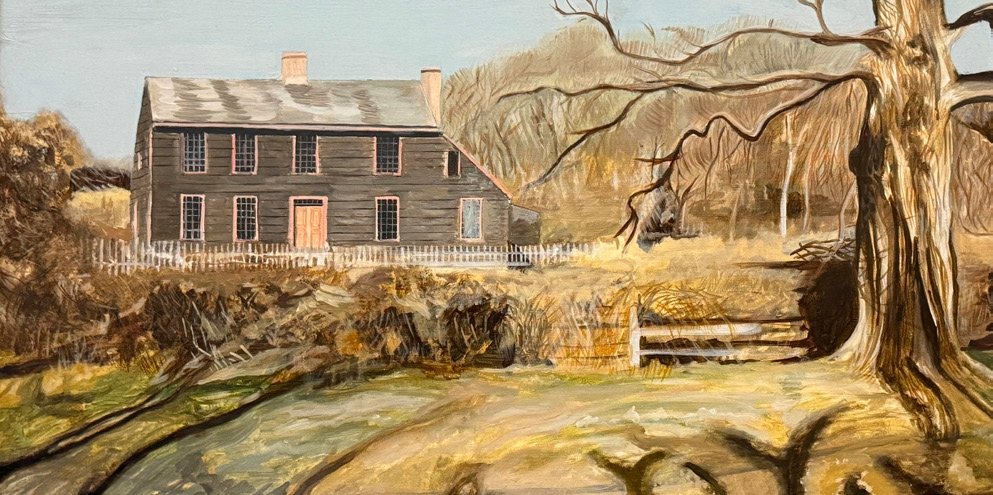
Henry Lloyd Manor House
During the Revolution members of the Lloyd family found themselves on opposing sides. The farms of two Lloyd patriots were confiscated by the British. Joseph, a patriot, fled to Connecticut. Fort Franklin, (now known as Fort Hill) was built by the British in 1778 on the western end of Lloyd Neck, overlooking the entrance to Cold Spring Harbor. Another fortification was built on the east side of Lloyd Neck near a large rock. This rock is called Target Rock because British warships used it for target practice.
Henry Lloyd IV was the last Lloyd to own the estate (1841.) He built a dock near the Causeway in 1852 as a stop for Oyster Bay-to-New York steamboats. During the 1880’s steamboats brought tourists to a beach recreation complex at the north end of the Causeway called Columbia Grove. The Lloyd property would continue to change hands, but it remained sparsely developed.
The early history of the West Neck portion of the Village included early settlers with greater ties to Huntington. During the Revolution, the residents of the West Neck area tended to be avid Patriots, as opposed to the Loyalists on Lloyd Neck. One of the earliest tidewater gristmills (milling grain into flour) was constructed in 1793-97 on the Mill Pond. This pond is adjacent to “Puppy Cove”, an extension of Huntington
Harbor. The Van Wyck-Lefferts Mill was accessed by traveling on Lefferts Mill Road (no longer a road) from Southdown Road. The Tidal Mill has been restored and is owned & preserved by The Lefferts Tide Mill & Preserve & Preserve.
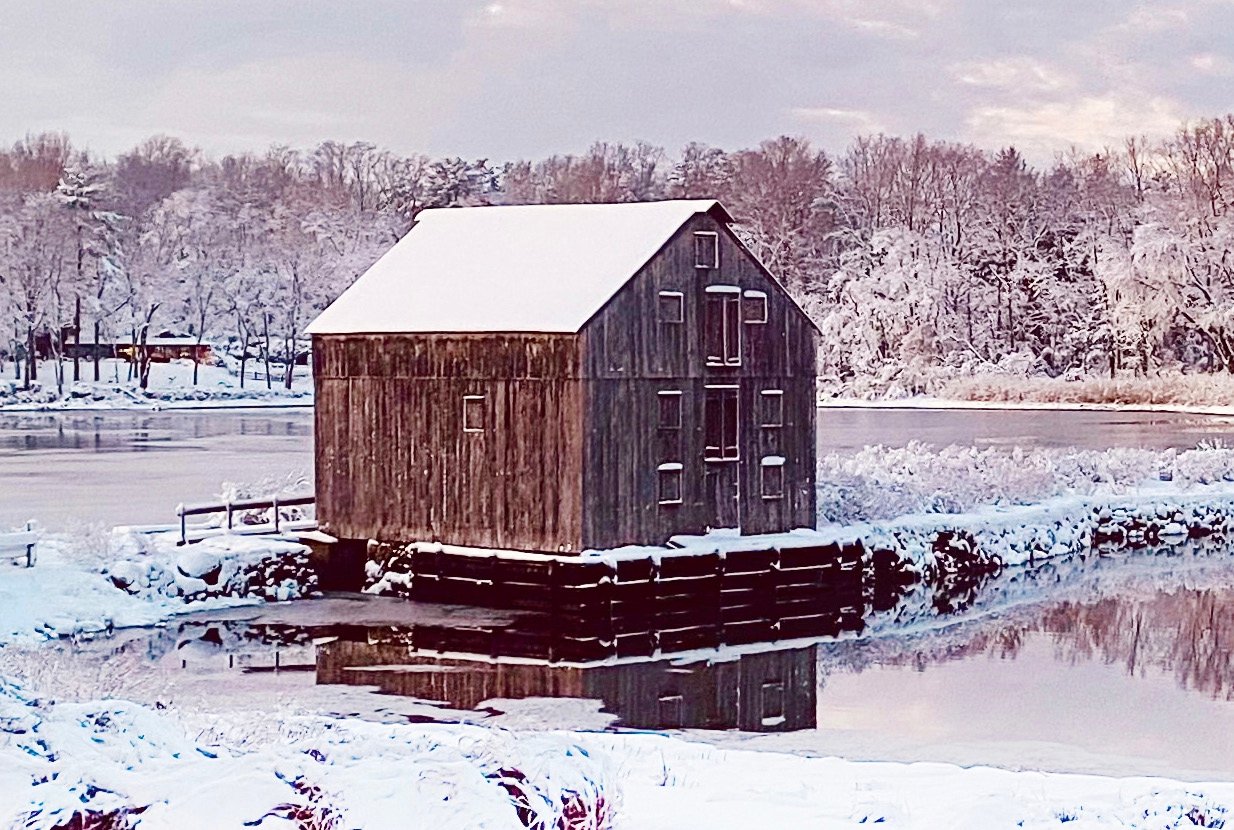
The Lefferts Tide Mill & Preserve
(Based on Patent # 3- signed by George Washington)
It is considered the best preserved 18th century tidal mill, remaining in its original location, in the United States. It is accessible by boat tours arranged periodically by The Huntington Historical Society: (T: 631-427-7045; Email:info@huntingtonhistoricalsociety.org)
The Crossman Brick Company was built at the current Village Park location after clay deposits, ideal for brickmaking, were discovered along Cold Spring Harbor. This large foundry shipped loads of bricks on barges to New York City from the shore at Village Park.
1886
Lloyd Neck Secedes From Queens County – Annexed To Suffolk County
It was not until 1886, after a year of much lobbying in the State Legislature, that Lloyd Neck became a part of the Town of Huntington (Suffolk County), thereby seceding from Oyster Bay (Queens County.)
The New York Sun in 1884 reported:
“The isthmus which connects the main part of Lloyd Neck with Long Island is a great picnic ground, & the picnickers who flock there in daily crowds worry the inhabitants of Lloyd Neck. (ed.: The Columbia Grove Beach Resort was located on the Lloyd Neck end of the causeway, & boats from New York City brought bathers for daily outings.) When residents need a constable they are forced to drive around the head of the bay to where the constable lives – they might sail across, but the picnics are held in the calm days of summer when there is no wind & it is too hot to row.”
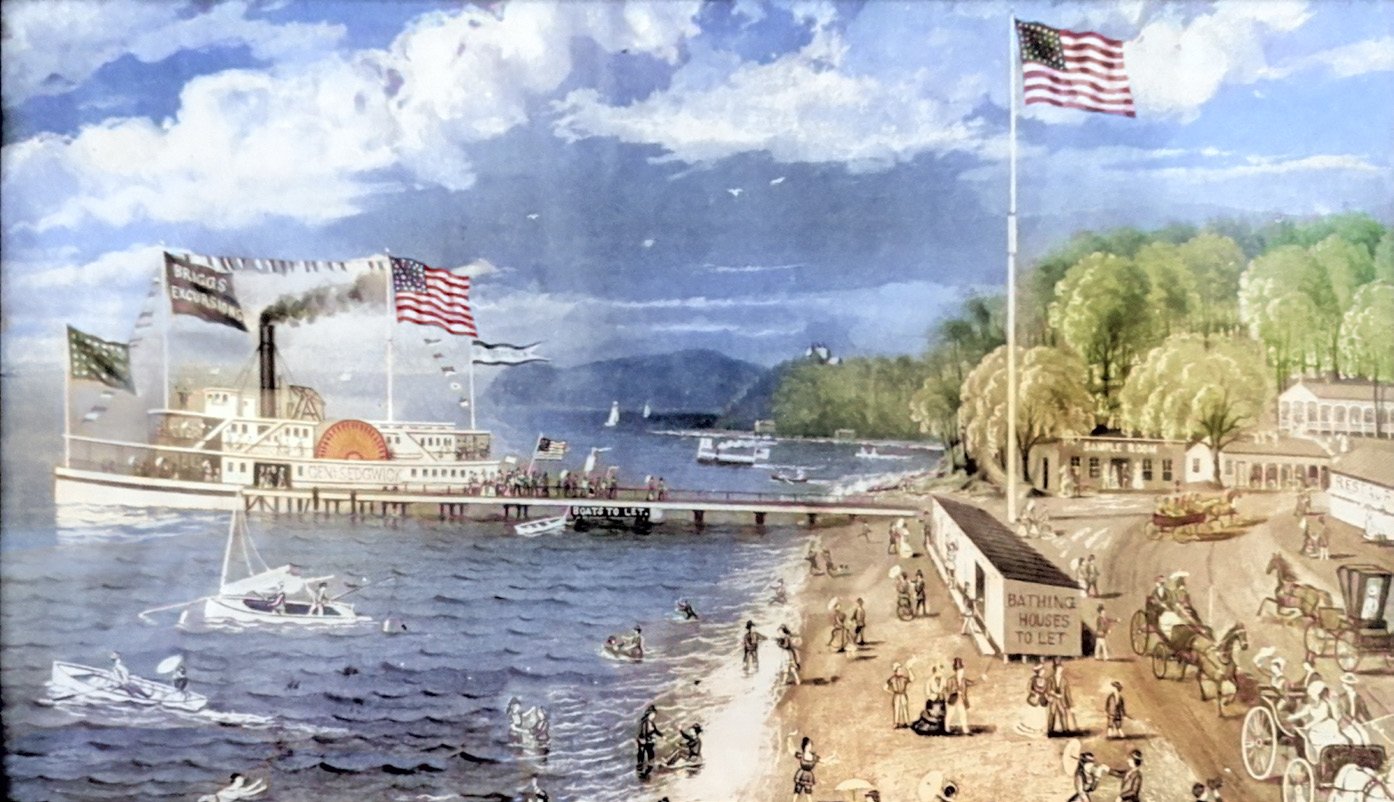
Columbia Grove (Edward Lange- 1881)
Many politicians in Queens County opposed the legislation annexing Lloyd Neck to the Town of Huntington, Suffolk County. An article in The East Norwich Enterprise (1885) on the subject of secession from Oyster Bay stated:
“Lloyd Neck is a very valuable tract of property, containing nearly 3,500 acres of as productive land as may be found in one tract east of the Alleghenies. There have been more dollars worth of timber, oak, hickory, & chestnut growing upon Lloyd Neck at one time than can now be found on the south side of Long Island from Gravesend to Montauk. The land is exceedingly fertile & produces immense crops naturally & with the generous treatment it receives from its enterprising owners, the receipts are simply enormous. Valuable houses & expensive barns & magnificent lawns are scattered here & there. Building sites cannot be obtained very readily from the wealthy owners, who desiring to live entirely secluded from the common herd, rarely sell unless to one of their own class, & then only at fabulous prices.”
1890's-1920's
Estate Period
In the late 1800s, Long Island’s North Shore became the desired location for very wealthy individuals to establish large estates. These estates extended east along the “Gold Coast” as far as Centerport. Many large estates were established in Lloyd Harbor. On the “West Neck” (mainland) side these included: Burrwood (Walter Jennings- Standard Oil Co.); Panfield, (Albert Milbank – Milbank, Tweed, et al);
Coindre Hall (George McKesson Brown) & Rosemary Farm (Roland Ray & Mary Conklinnow the Seminary of the Immaculate Conception.) Estates established on “Lloyd Neck” included: Kenjockety (Wilton Lloyd Smith); Fort Hill (William J. Matheson); Colgate Estate (Gilbert G. Colgate); Eastfair (S.M. Fairchild ); & Caumsett (Marshall Field
III.)
Marshall Field came to Lloyd Neck in 1921, after searching Long Island’s North Shore for
a tract of land suitable for the country home he envisioned. Field had been educated in
England & yearned to
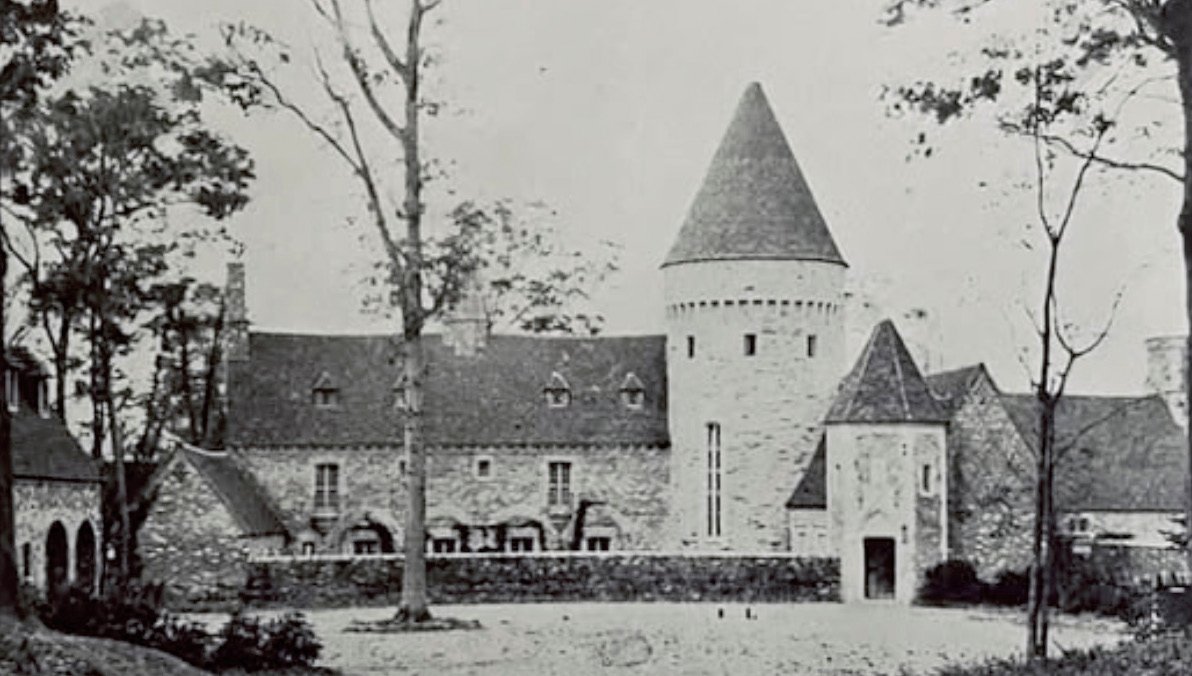
Eastfair (S.M. Fairchild)
replicate the life of an English
country gentleman with a grand manor house & self-sufficient estate. Caumsett, a 1,500 acre estate, was carefully planned as a well-integrated rural estate village with a farm complex, servants quarters, dairy farm,
extensive gardens, greenhouses, magnificent stables for horses, and kennels. Caumsett was considered to be one of the
finest country estates in America.
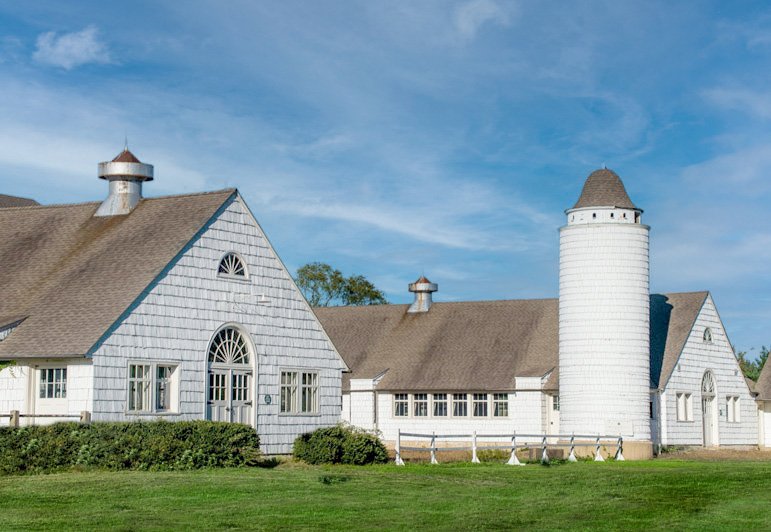
Caumsett Dairy Barn
1926
Village Incorporation
First Mayor & Trustees
The Village was incorporated in 1926. At the time of Incorporation, the tax rolls listed 62 owners of 80 parcels of land. Only seven of them were less than three acres.
Two West Neck residents, Albert Milbank & Colonel Timothy S. Williams, were the prime movers of Incorporation. The residents were motivated by a desire to control future development through the adoption of a zoning plan designed to preserve the rural surroundings & protect
the community from urban encroachment. There was also some concern about lack of an effective police presence.The
May 21, 1926 issue of the Long Islander reported:
“The scandalous condition of affairs at Lloyd’s Beach, where traffic in intoxicating liquors has been going on unrestrictedly and bootlegging by the wholesale… whole cargoes having been unloaded from schooners and sloops, without the least interference by our town or county law
enforcement officers. This has long been a source of irritation to the great majority of the residents of West Neck and Lloyd’s Neck, and they propose to clean out the foul nest, as far as possible, with their own
efficient constabulary.”
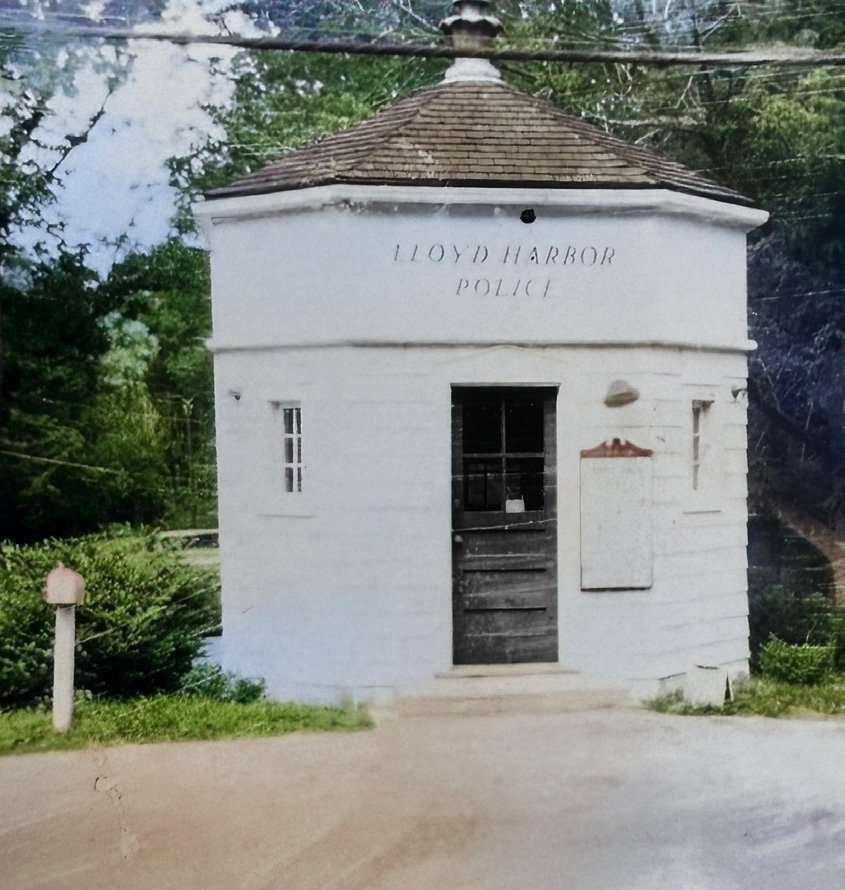
LHPD Police Booth constructed 1928
The first Mayor of Lloyd Harbor was Mr. Albert G. Milbank. The first Trustees were: Mr. Wilton Lloyd-Smith, Mrs. Ellen Day Ranken, Mr. Marshall Field, III, & Mrs. Anna Matheson Wood. Several months after incorporation the first zoning ordinance was enacted.
Albert G. Milbank continued as Mayor for 20 years until 1947. It was a period of slow growth for the Village. The population increased from 444 in 1926 to 480 in 1930, 588 in 1940, & 700 in 1946. Major growth occurred after World War II during the fifteen-year period of 1946 to 1961. The advent of the graduated income tax, the increasing cost and difficulty of engaging adequate & competent help, and the geometric distribution of family wealth subsequent to the demise of founding family members, heralded the demise of the grand country estate era. The Village population increased from 700 in 1946 to 2,521 by 1960 and consisted largely of small homeowners. By 1961, 17 new subdivision maps had been filed & some 35 additional roads opened.
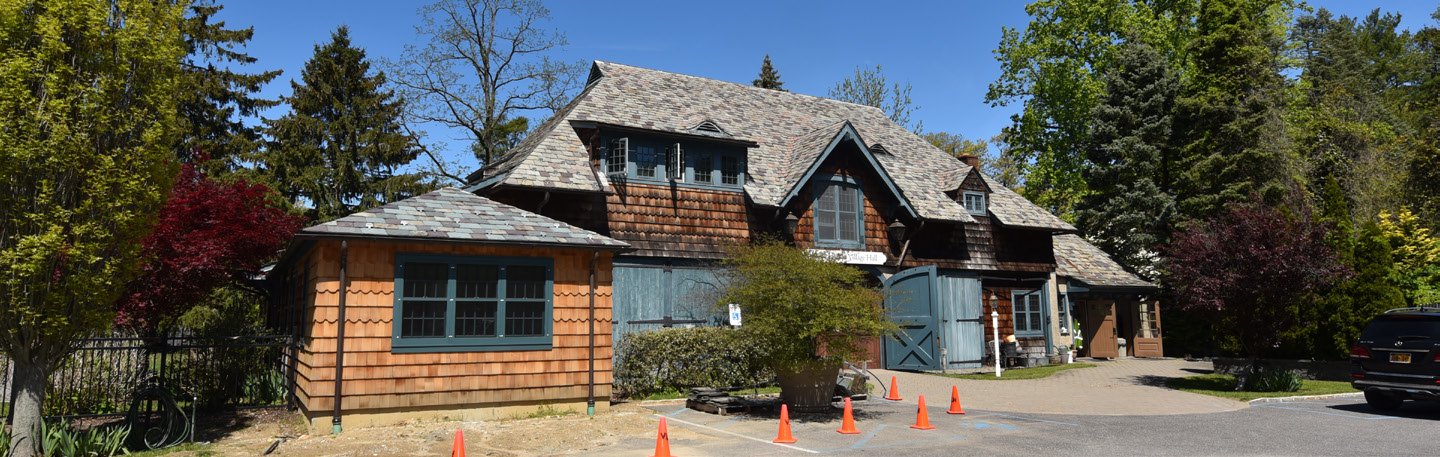
In 1955, the Village acquired its first real estate holding, the former Jennings Estate barn & two acres on Middle Hollow Road. This was to be used as Village Hall & for storage of Village equipment. The structure was remodeled, & the Board of Trustees held its first meeting there in April 1958.
In 1959, the Village purchased 73 acres on the shore of Cold Spring Harbor for a
park & playground.
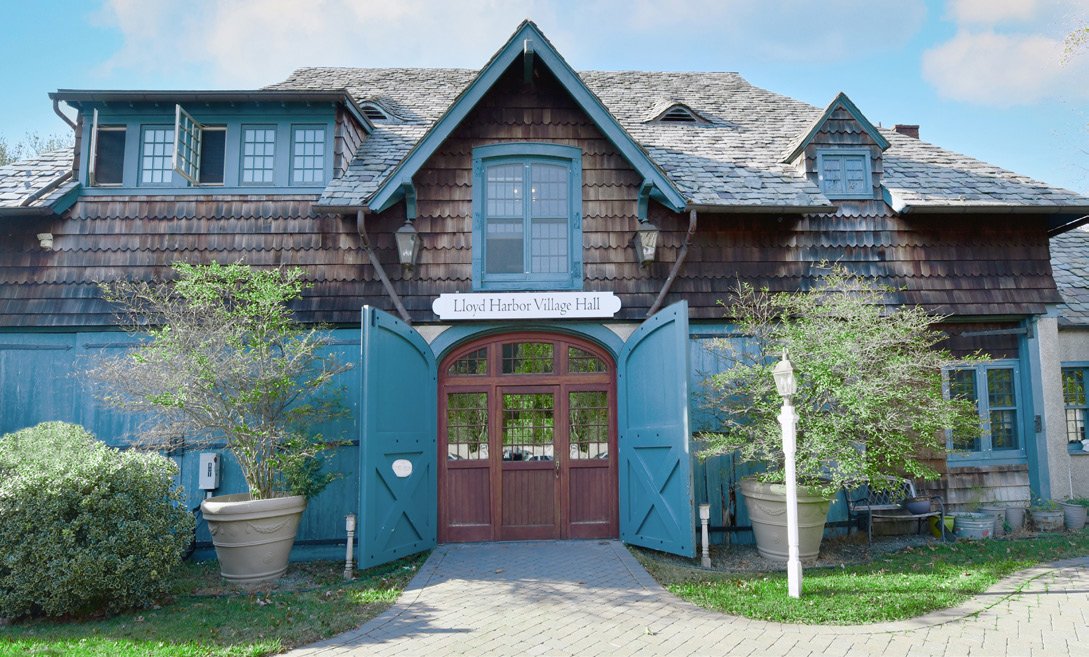
Lloyd Harbor Village Hall
A Park & Beach Committee was established to direct improvements. The Park opened in the summer of 1960. Today our beautiful beachfront Park hosts a great Camp, 4 tennis courts with pickleball lines, a mooring field,
dock, kayak/dinghy storage, a children’s playground, grills and picnic tables.
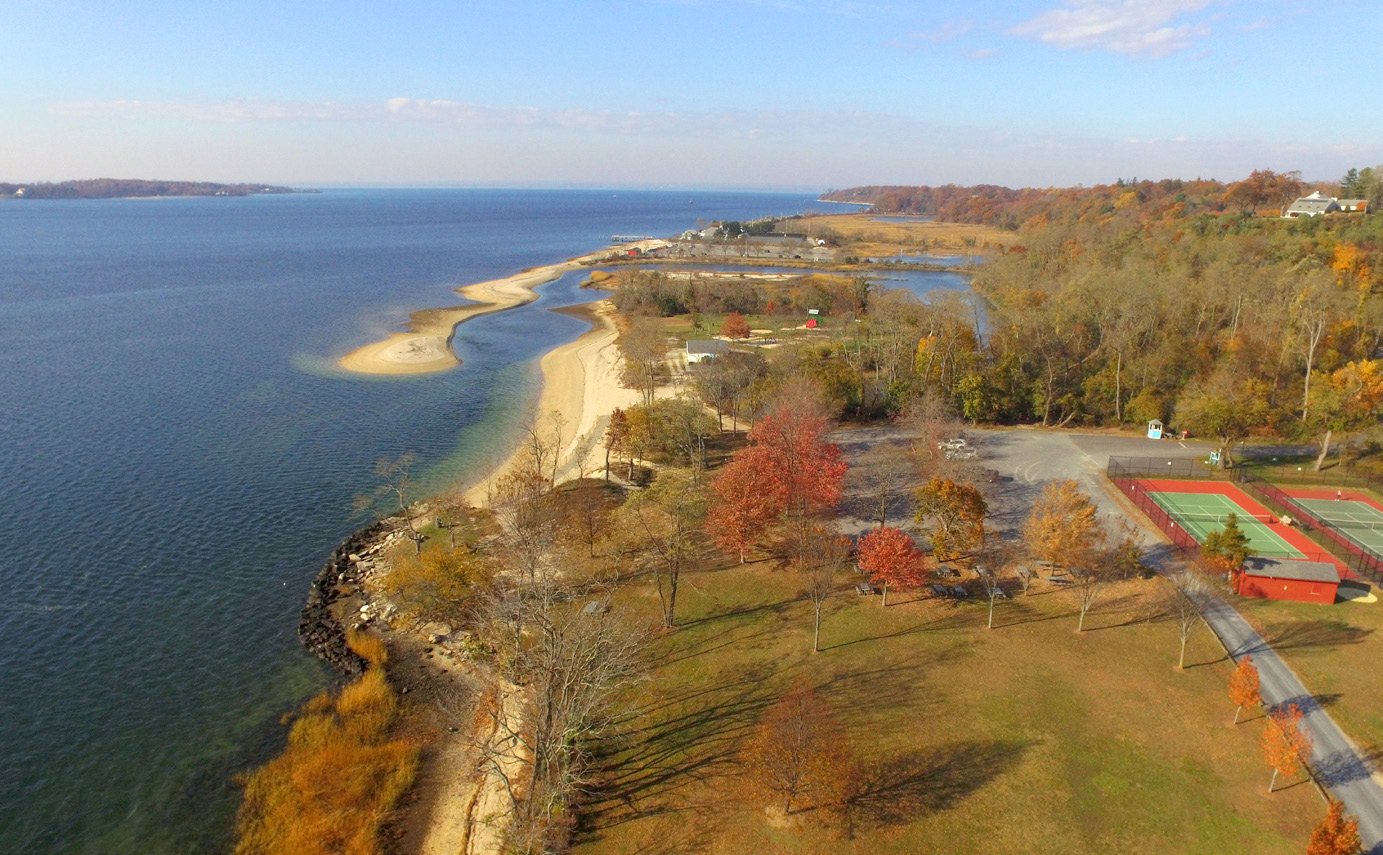
Lloyd Harbor Village Park
1961-1967
Village Faces Threats To Quality of Life
Robert Moses Development Project; Nuclear Power Station Proposal; Sale of Caumsett
In 1961, Ruth Field (Mrs. Marshall Field III) sold Caumsett to the State of New York with the proviso that the estate be used “forever for park purposes.” This created great concern among Village residents. Robert Moses, President of the Long Island Park Commission, had prepared an extensive development plan. The plan included extending the Bethpage Parkway along Route 108, up the shore of Cold Spring Harbor, cutting through the Village Park, crossing West Neck Road, & running adjacent to the Seminary to the shore of Lloyd Harbor. A suspension bridge was to span Lloyd Harbor & connect to Caumsett. Moses planned to construct two 18-hole golf courses, turn the Main House into a clubhouse, establish a large bathing beach area along the Sound, & establish extensive bridlepath facilities. The parkway rights-of-way Lloyd Harbor Village Park were acquired by the State in 1963 & are still owned by the State. For a variety of reasons, including determined opposition by the Village, the planned development of Caumsett did not occur. Today Caumsett remains a passive park, protected by the Village’s Local Waterfront Revitalization Plan (LWRP) and an excellent “friends group”, The Caumsett Foundation.
In late 1967, the Long Island Lighting Company’s proposal to build & operate a nuclear power station on the eastern end of Lloyd Neck aroused a storm of controversy. Residents were very opposed & formed the Lloyd Harbor Study Group to stand in formal opposition to the project. In 1975 LILCO abandoned use of the site. Eventually the area (111 acres) was sold
and is now Seacrest Estates.
1960's - 2000's
Post-Estate Era
The sale of Marshall Field’s enormous Caumsett estate heralded a 40 year span that became an era of donation of large tracts of land, sale & sub-division of other parcels, and related growth in needed
Village support services.
Significant donations, sales & sub-divisions included:
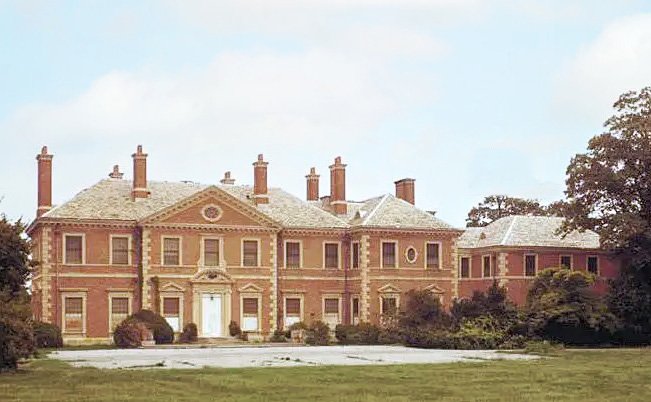
The Marshall Field III Main House
- Panfield, the estate built by Albert Milbank, first Mayor of The Village (1927-1947), was sold in 1957 and later subdivided. The main house and surrounding property was purchased by Bernard Castro (Castro Convertible) and for many years was the home of his daughter, Bernadette Castro, former NYS Parks Commisioner;
- In the late 1960’s the Nike Defense Missile site on West Neck Road (adjacent to the current Knutson Court) was dismantled & later sold at auction;
- In 1967 Target Rock was donated by the Eberstadt family & became a National Wildlife Refuge;
- In 1968 the 93 acre Livingston Estate was acquired by Friends World College. The College was subsequently dismantled & the property ultimately sold into private hands;
- In 1968 Mrs. Anna Matheson Wood, “Aunt Nan” as she was known to many old timers, who was an honorary member of the Three Harbors Garden Club, conveyed the meadows which were part of her estate, Fort Hill, to The Nature Conservancy. Subsequent stewardship was taken over by the Friends of Matheson Meadows & later the North Shore Land Alliance;
- In 1968 the DeClairville family donated the Van Wyck-Lefferts Tide Mill to The Nature Conservancy. An endowment of roughly $200,000 was included. Ownership of the Mill was transferred in 2019 to the Lefferts Tide Mill & Preserve;
- In 1975 Charles Robertson established the Marie H. Robertson Memorial Fund for Neuroscience. He gifted the Banbury Estate and an $8 million endowment to the Cold Spring Harbor Laboratory, directed by James Watson;
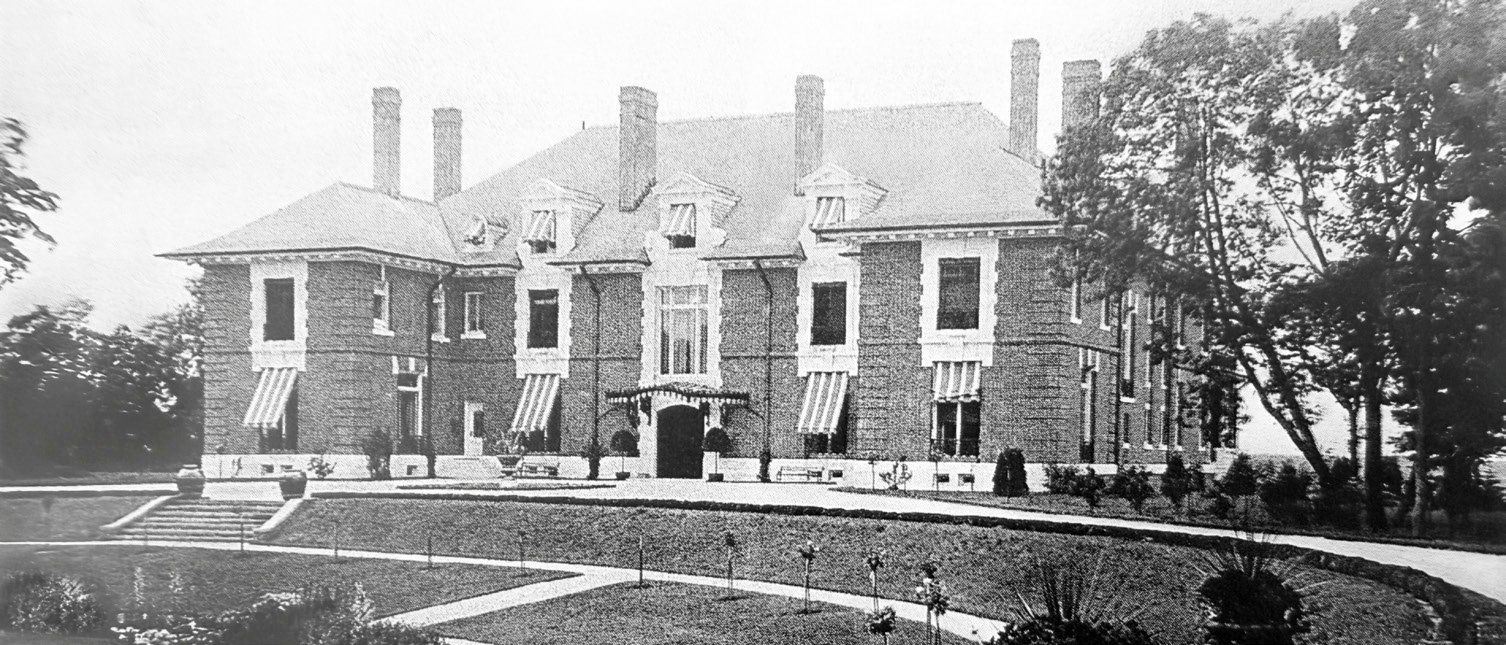
Burrwood (Circa 1980 - Walter Jennings Estate)
- In 1987 Burrwood, the Walter Jennings Estate, was sold for $5.5 million. The Estate carriage house had previously been transfered to The Village of Lloyd Harbor for use as a Village Hall. A portion of the Estate, now known as “Jennings Field” is part of the Jennings legacy to the Village. After Jennings’ death, the main house was used as the location for the Industrial Home for the Blind. Subsequent to the sale in 1987 the main house fell into disrepair and was torn down in 1995;
Some of the significant private subdivisions include:
- Fiddlers Green, originally part of Caumsett, was subdivided & built out between 1955-1980, becoming the largest homeowner’s association in the Village;
- Burrwood was subdivided in 1988;
- Jennings Ridge, also part of the Jennings Estate, was subdivided in 1999;
- Banbury Lane, part of the Banbury Estate, was subdivided in 2000;
- The Colgate Estate was subdivided in 2001;
- Construction of The Seminary of the Immaculate Conception began in 1926. The property, formerly Rosemary Farm, was sold to The Archdiocese of Brooklyn by Roland Conklin in 1924. Construction of the Seminary was completed in 1930. The Rosemary Farm Main House was used by the Seminary as a retreat & residence before destruction by fire in 1990. In 2025 the 223 acre property was subdivided into three parcels, which now belong to the Village, the Seminary, & New York State.
In the late 1960’s the Village had approximately 800 homes. As subdivisions grew & new roads were formed, demands on Village services increased. As of 2025 the number of homes stood at approximately 1,350.
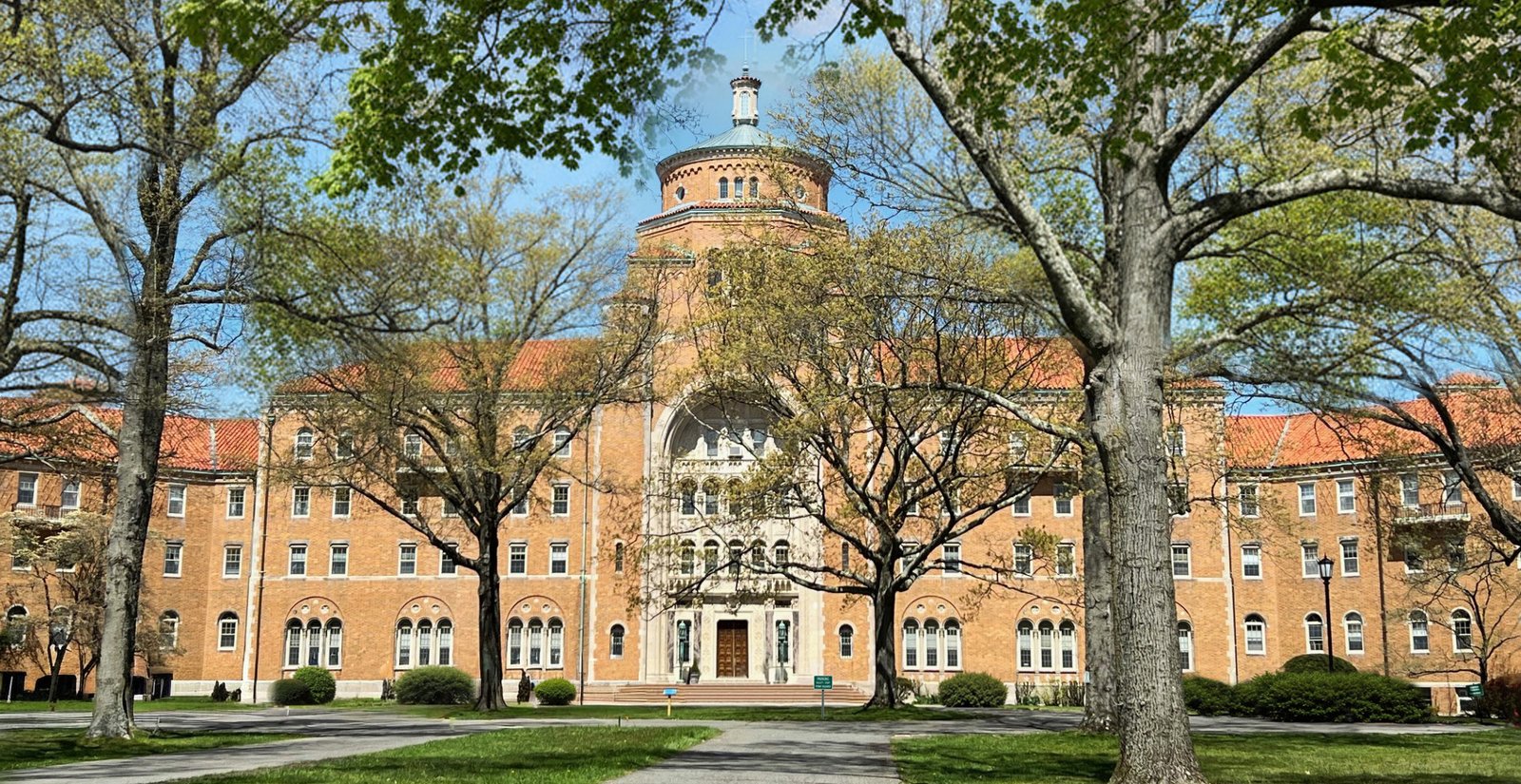
The Seminary IC Retreat & Conference Center
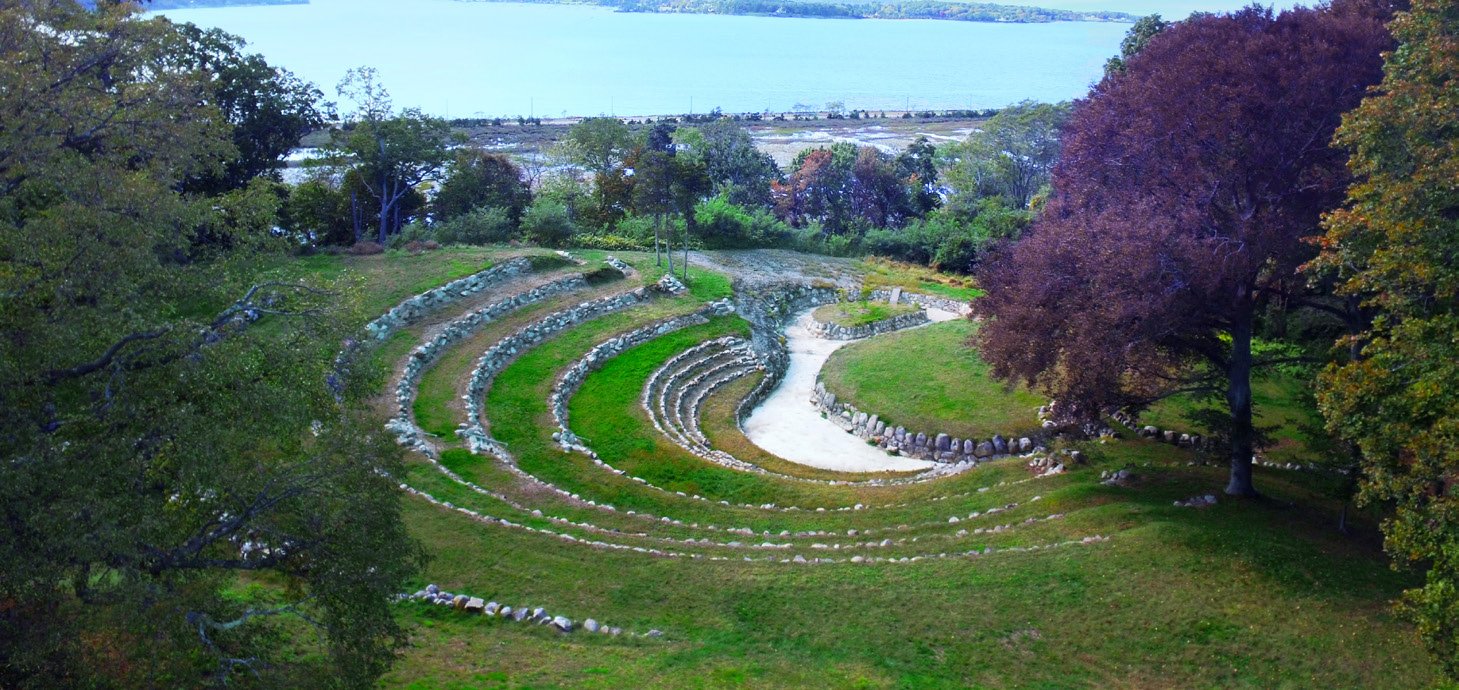
Amphitheater (Rosemary Farm)
1926 - 2026
100 Years of Incorporation
Since incorporation, the Mayor & Village Trustees have faced ongoing challenges to local control and “home rule.” They continue to respond to the growing needs of the Village, always mindful of preservation and maintenance of the quality of life that residents enjoy. Some of the challenges faced and major improvements made include:
- In 1961 Caumsett was sold to New York State. Robert Moses, President of the LI Park Commission was determined to implement an extensive development plan. The Moses plan was vehemently opposed by the Village. The result is that today Caumsett remains a passive use New York State Historic Park
- In the mid 1960’s, the original Lloyd Harbor Police Booth (artist’s rendition right- M.R. Belknap 6/75) was replaced by a Station House.
- In 2025/26 the Station House was renovated to accommodate the requirements of modern policing & handle the huge influx of visitors to the parks & preserves in our Village. Harbor Control is now staffed with Peace Officers trained to enforce waterway/harbor regulations.
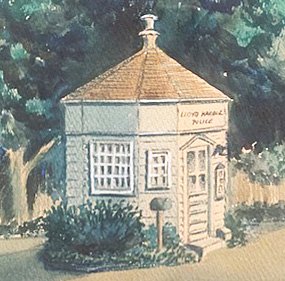
Original Police Booth (1928)
- In 1976, the Village adopted its first Master Plan.One of the purposes was to require that any residence be at least 1,800 square feet. This addressed the issues of seasonal dwellings being abandoned in the winter months.
- In 2008 the Master Plan was updated pursuant to a moratorium on subdivision, and several years of intense study with professional input. This plan governs the Village today. It is unique in that it allows size of structure and lot coverage to increase with property size.
- In 1997, for purposes of protection, the Village adopted an LWRP (Local Waterfront Revitalization Program.) This took years of study to implement. It is critical to preserving, among other things, local control over State/Federal capital projects or permits protecting the Village’s 20 miles of waterfront.
- In 2022/23 the Village Hall was renovated in order to accommodate Village Administration and the Building & Highway Departments in one central location. The Village Park facilities & programs have been enhanced to include additional Camp programs, tennis & pickleball courts, children’s playground, dock & mooring facilities & kayak/dinghy storage, and grills & picnic tables.
- In 2025, the Seminary land was subdivided into three parcels. One parcel was purchased by the Village, one by NY State and the third retained by the Seminary. In 2026, the Village finalized purchase of the parcel containing the original Rosemary Farm entrance, the amphitheater, and the barn. The Seminary retained acreage containing its main building, surrounding gardens and fields. New York State, using proceeds from an EPA bond, acquired the remaining acreage, including all steep slopes leading to the waterfront. Together, these coordinated purchases prevented the land from being sold to developers.
It is an ongoing challenge for the Mayor, Trustees & Village Officials to deal with State & Federally imposed efforts to undermine “Home Rule” & local control. Our focus for the future is to continue to preserve the quality of life in our unique Village, which retains such beautiful expanses of open land and yet is commutable to New York City.